
BY |
California Bail Trends: A 10-Year Analysis of Arrest and Pretrial Release Rates
Published by Future Bail Bonds | Updated June 12, 2025
Over the past 10 years, California has undergone significant changes in arrest procedures, pretrial release policies, and how bail is handled across counties. With numerous legislative efforts to reform the bail system, the state has become a national focal point in the criminal justice debate.
This article presents a 10-year review of California's arrest and bail trends from 2015 to 2025. It includes:
- Statewide and county-level arrest data
- Changes in pretrial release patterns
- Trends in bail bond usage
- Impact of major legislative reforms
Statewide Arrest Trends (2015–2025)
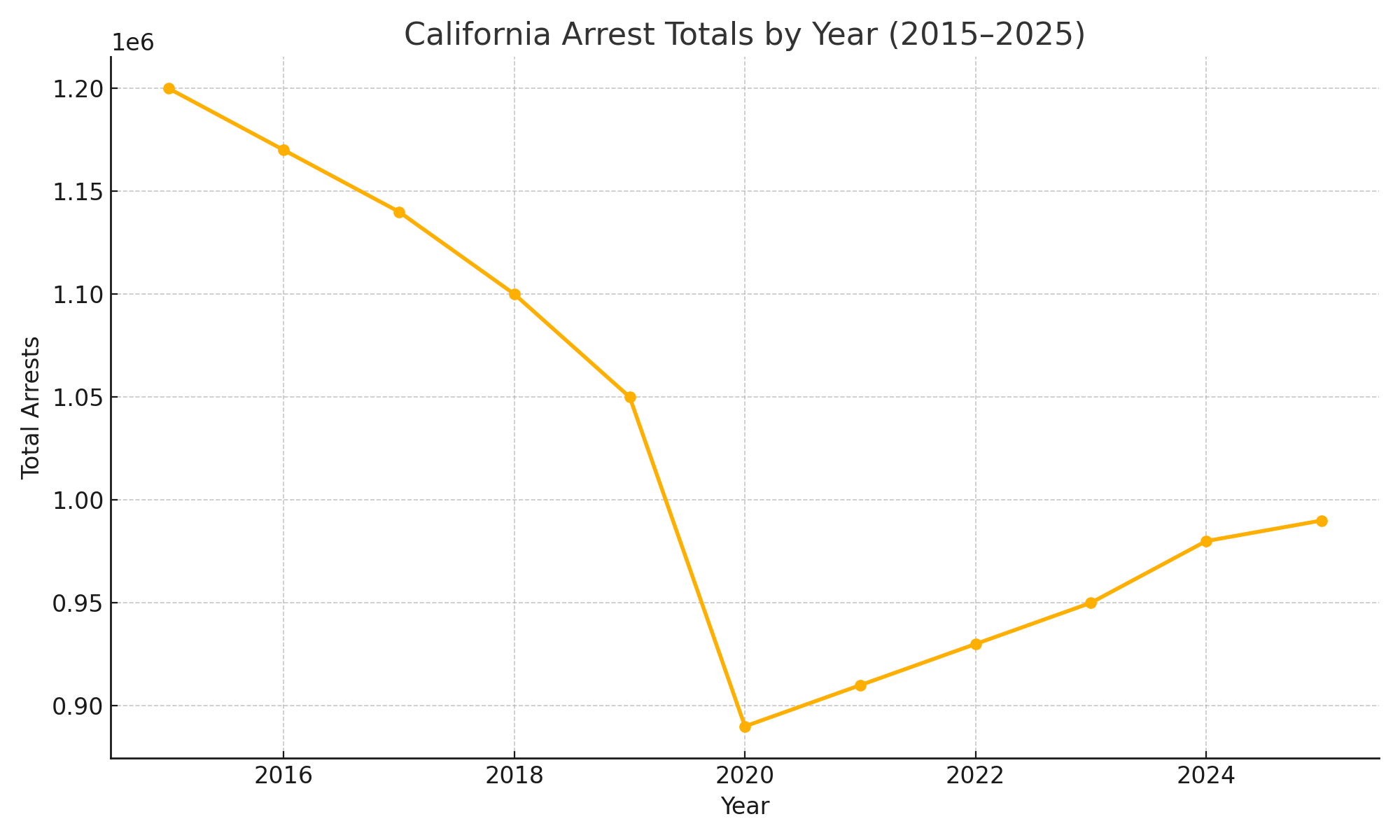
From 2015 to 2025, California’s total number of arrests declined by nearly 20%. The largest drop occurred between 2019 and 2021, with COVID-19 impacting enforcement and court operations. Arrest numbers have since rebounded slightly but remain below pre-2017 levels.
Highlights:
- 2015: Approximately 1.2 million arrests recorded statewide
- 2020: Arrests dropped to under 900,000
- 2025: Arrests estimated at just under 1 million
Pretrial Release Rates and Shifting Policies
Pretrial release practices have shifted considerably. Larger counties such as Los Angeles and San Francisco have implemented broader own recognizance (OR) release programs. Meanwhile, smaller or rural counties continue to rely on cash bail as the primary means of release.
- In 2015, only about 45% of low-level defendants were released without posting bail.
- By 2025, over 70% of low-level cases in major counties involved OR or supervised release.
Bail Bond Industry Trends
Despite reform efforts, bail bonds remain a crucial part of the justice system for moderate to serious charges. While the number of bail bonds issued has declined, the average bail amount has increased, requiring many families to seek financing options.
- Use of bail bonds has declined by 25% since 2015
- Average bail amounts have increased due to the severity of retained cases
- Financing programs like zero-down bail are helping meet demand
Legislative Impacts on Bail Practices
California has introduced several bills affecting how bail is used and regulated:
- SB 10 (2018): Passed to eliminate cash bail, but overturned by voter referendum in 2020
- SB 262 (2021): Proposed caps on bail amounts, but stalled in the legislature
- SB 562 (2025): Currently under consideration; would require partial refunds of bail if no charges are filed
These bills continue to shape the way courts and counties evaluate risk, flight potential, and the role of surety companies in pretrial decisions.
County Comparisons
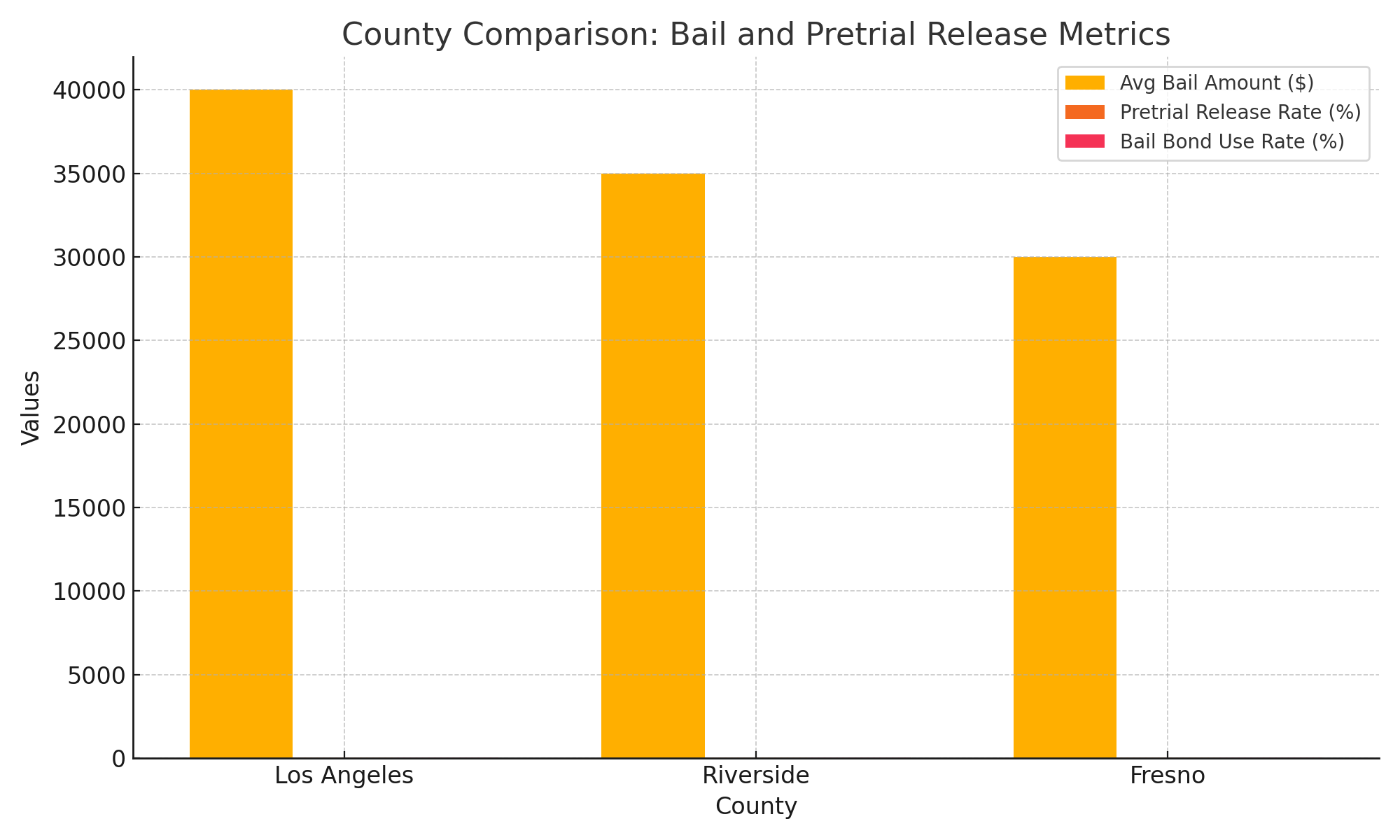
| County | Average Bail Amount | Pretrial Release Rate | Bail Bond Use Rate |
|---|---|---|---|
| Los Angeles | $40,000 | 68% | 28% |
| Riverside | $35,000 | 44% | 51% |
| Fresno | $30,000 | 36% | 59% |
Looking Ahead
The future of bail in California depends on pending legislation, judicial interpretation, and continued public debate. While some advocate for eliminating monetary bail entirely, others point to the effectiveness of surety bonds in ensuring appearance and accountability.
For now, the bail industry continues to adapt by offering more flexible financial terms and educating families about their options.
Conclusion
Understanding California’s arrest and bail trends helps everyone—from lawmakers to everyday citizens—make informed decisions. Bail bonds remain a vital tool for helping individuals return home, maintain employment, and prepare legal defenses during one of the most difficult times in their lives.